


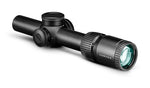

Riton Optics 3 Primal 4-16x44 30mm SFP Illuminated Duplex Riflescope - RO3P416ASD23
$399.00$459.99Unit price /Unavailable-
Riton Optics 5 Tactix 1-10x24mm FFP Illuminated 30mm Riflescope - RO5T110LFI23
$799.00$959.99Unit price /Unavailable -
Riton Optics 5 Conquer 5-25x56 34mm Illuminated MOR FFP Riflescope - RO5C525AFI23
$799.00$859.99Unit price /Unavailable -
Riton Optics 5 Conquer 5-25x56 34mm FFP Illuminated MRAD Riflescope - 5C525LFI23
$799.00$859.99Unit price /Unavailable -
Riton Optics 3 Primal 4-16x44 30mm SFP MOA Riflescope - RO3P416AS23
$399.00$459.99Unit price /Unavailable -
Riton Optics 3 Primal 3-18x50 30mm SFP Illuminated MRAD Riflescope - 3P318LFI23
$499.00$719.99Unit price /Unavailable -
Riton Optics 3 Tactix 1-8x24mm 30mm SFP Illuminated FDE Riflescope - RO3T18ASIFDE23
$399.00$479.99Unit price /Unavailable -
Riton Optics 3 Tactix 1-8x24mm 30mm SFP Illuminated OT Riflescope - 3T18ASIBLK23
$399.00$439.99Unit price /Unavailable -
Burris Signature HD 5-25x50mm 30mm FFP Illuminated 6.5 Creedmoor Riflescope - BU200535
$849.99$1,019.99Unit price /Unavailable -
Burris Signature HD 5-25x50mm 30mm Fine Plex Matte Black Riflescope - BU200534
$749.99$899.99Unit price /Unavailable -
Burris Signature HD 5-25x50mm 30mm SFP Illuminated Ballistic E3 Riflescope - BU200533
$799.99$959.99Unit price /Unavailable -
Burris Signature HD 3-15x44mm 1-Inch Tube Plex Riflescope, Matte - BU200532
$549.99$659.99Unit price /Unavailable -
Burris Signature HD 3-15x44mm Illuminated Ballistic E3 1-Inch Riflescope - BU200531
$599.99$719.99Unit price /Unavailable -
Burris Signature HD 2-10x40mm Ballistic E3 Reticle Rifle Scope - BU200530
$399.99$480.00Unit price /Unavailable -

Burris Fullfield IV 3-12x56mm 30mm Ballistic E3 Illuminated Rifle Scope - BU200491
$339.99$407.99Unit price /Unavailable -
Burris RT-6 1-6x24mm 30mm Illuminated Rifle Scope w/ Mount & FastFire 3 - BU200475
$599.99$720.00Unit price /Unavailable -
Burris Fullfield E1 3-9x40 Rifle Scope - Ballistic Plex 350 Legend (200366)
$169.99$203.99Unit price /Unavailable -
Burris Fullfield E1 3-9x40mm Ballistic Plex ML Riflescope - BU200347
$169.99$203.99Unit price /Unavailable -
Burris Fullfield E1 3-9x40 1-Inch Ballistic Plex Shotgun Riflescope - 200346
$169.99$203.99Unit price /Unavailable -
Burris Handgun Scope 3-12x32 Ballistic Plex Matte - BU200309
$549.99$659.99Unit price /Unavailable -
Burris Optics Handgun Scope 2-7x32mm Plex Reticle Matte - BU200291
$419.99$503.99Unit price /Unavailable -
Burris Scout 2.75x20mm Heavy Plex Matte 1-Inch Tube Riflescope - BU200269
$299.99$359.99Unit price /Unavailable -
Burris Optics Handgun Scope 2x20mm Plex Reticle Nickel RFP - BU200229
$279.99$335.99Unit price /Unavailable -
Burris 2x20mm Handgun Scope, Plex Reticle, Matte Black - 200218
$279.99$335.99Unit price /Unavailable -
Burris Droptine 3-9x40mm Rimfire Rifle Scope - Ballistic Plex .22LR - BU200019
$149.99$167.99Unit price /Unavailable -
Athlon Ares BTR Gen3 4.5-27x50 FFP MOA Riflescope, 30mm Tube - ATL212016
$839.99$1,049.99Unit price /Unavailable -
Athlon Ares ETR 4.5-30x56 34mm FFP APRS12 Reticle Riflescope - ATL212114
$1,199.99$1,499.99Unit price /Unavailable -
Athlon Cronus BTR GEN2 UHD 4.5-29x56 34mm FFP Illuminated MIL Riflescope - ATL210115
$1,499.99$1,874.99Unit price /Unavailable -
Athlon Cronus BTR GEN2 UHD 4.5-29x56 34mm APLR5 FFP Illuminated Riflescope - ATL210113
$1,499.99$1,874.99Unit price /Unavailable -
Athlon Helos BTR GEN2 4-20x50 30mm FFP Illuminated MOA Riflescope - ATL214108
$649.99$812.49Unit price /Unavailable -
Sig Sauer Buckmasters 3-9x40mm 1-inch Tube BDC Reticle - Black (SOBM33001)
$117.77$128.37Unit price /Unavailable -
Leupold VX-Freedom 3-9x 40mm Riflescope - Hunt-Plex Reticle, SFP, 1" Tube - 181307
$399.99$451.99Unit price /Unavailable -
Leupold VX-Freedom 1.5-4x 20mm Riflescope - MOA-RING Reticle, SFP - 180590
$299.99$338.99Unit price /Unavailable -
Leupold VX-Freedom 3-9x 40mm Riflescope - Duplex Reticle, SFP, 1" Tube - 177910
$399.99$451.99Unit price /Unavailable -
Leupold VX-Freedom 3-9x 40mm Riflescope - Duplex Reticle, SFP, 1" Tube - 176011
$399.99$451.99Unit price /Unavailable -
Leupold VX-Freedom 2-7x 33mm Riflescope - Rimfire-MOA Reticle, SFP, 1" Tube - 174179
$299.99$338.99Unit price /Unavailable -
Leupold VX-Freedom 1.5-4x 20mm Riflescope - Pig-Plex Reticle, SFP - 174177
$299.99$338.99Unit price /Unavailable -
Leupold VX-Freedom 4-12x 40mm Riflescope - Creedmoor Reticle, SFP, 1" Tube - 179313
$349.99$395.49Unit price /Unavailable -
Leupold VX-Freedom 1.5-4x 28mm Riflescope - IER Scout Duplex Reticle, SFP - 175074
$349.99$395.49Unit price /Unavailable -
Leupold VX-Freedom 3-9x 50mm Riflescope - Duplex Reticle, SFP, 1" Tube - 180613
$449.99$508.49Unit price /Unavailable -
Leupold VX-Freedom 3-9x 40mm Riflescope - CDS Tri-MOA Reticle, SFP, 1" Tube - 180603
$449.99$508.49Unit price /Unavailable -
Leupold MARK3HD 1.5-4x 20mm Riflescope - AR-BALLISTIC Reticle, SFP - 180670
$499.99$564.99Unit price /Unavailable -
Leupold Mark 3HD 3-9x 40mm Riflescope - Mil-Dot Reticle, SFP, 30mm Tube - 180665
$499.99$564.99Unit price /Unavailable -
Leupold VX-3HD 1.5-5x 20mm Riflescope - DuplexTE Reticle, SFP - 180615
$499.99$564.99Unit price /Unavailable -
Leupold VX-Freedom 4-12x 50mm Riflescope - Duplex Reticle, SFP, 1" Tube - 180602
$499.99$564.99Unit price /Unavailable -
Leupold VX-3HD 4.5-14x 40mm Riflescope - Duplex Reticle, SFP, 1" Tube - 180619
$699.99$790.99Unit price /Unavailable -
Leupold VX-3HD 3.5-10x 50mm Riflescope - Duplex Reticle, SFP, 1" Tube - 180618
$599.99$677.99Unit price /Unavailable -
Leupold Mark 3HD 4-12x 40mm Riflescope - TMR Reticle, SFP, 30mm Tube - 180669
$599.99$677.99Unit price /Unavailable -
Leupold VX-Freedom 3-9x 50mm Riflescope - FireDot Twilight Hunter Reticle, SFP, 30mm Tube - 177228
$599.99$677.99Unit price /Unavailable -
Leupold VX-Freedom 6-18x 40mm Riflescope - Tri-MOA Reticle, SFP, 30mm Tube - 175081
$599.99$677.99Unit price /Unavailable


What Is a Rifle Scope?
A rifle scope is an optical sighting device mounted to a rifle that uses a series of lenses to magnify a target and provide a precise aiming point: typically a reticle (also called a crosshair). Unlike red dot sights or holographic sights, rifle scopes offer magnification, making them the go-to choice for medium- to long-range shooting where target identification and precision matter most.
Scopes vary enormously in size, magnification range, glass quality, and feature set. A compact 1-4x scope for a hunting carbine is a completely different tool than a 5-25x precision rifle scope built for PRS competition. Understanding those differences is the first step to choosing the right one.
Rifle Scope Use Cases: Matching the Scope to the Job
Before you look at a single spec, ask yourself one question: what am I actually using this for? Here's a breakdown of the most common use cases and what each one demands from a scope.
Close to Mid-Range: Hunting, Home Defense, and Run-and-Gun
If your shots are typically inside 200 yards, think whitetail deer hunting in the woods, hog hunting, or running a carbine in 3-Gun competition, you don't need a lot of magnification. What you need is fast target acquisition, a wide field of view, and a scope that doesn't slow you down. This is where low-power variable optics (LPVOs) shine. A 1-6x or 1-8x scope gives you a true 1x setting for close-range work (almost like a red dot) and enough top-end magnification to reach out to 300–400 yards with confidence.
Mid-Range: Versatile Hunting and Tactical Shooting
For shooters covering varied terrain, open fields one day, timber the next, a 3-9x or 3-15x scope is the classic sweet spot. The 3-9x40 is arguably the most popular rifle scope configuration ever made, and for good reason. It handles everything from 50 yards to 400+ yards without compromise, and it's available at almost every price point. Step up to a 3-15x or 4-16x and you gain extra reach for longer field shots without giving up much at the low end.
Long Range: Precision Shooting and PRS Competition
Once you're pushing past 500 yards consistently, or shooting precision rifle series (PRS) matches, you need a scope with serious magnification, repeatable turrets, and glass that holds up at maximum power. Think 5-25x, 4.5-27x, or even higher. At this range, optical clarity, tracking accuracy, and zero repeatability aren't nice-to-haves: they're requirements. A scope that tracks inconsistently or has soft turrets will cost you shots downrange.
Extended-Range Hunting
Western big game hunters, elk, mule deer, antelope, often need to stretch shots to 400–600 yards in open country. A 4-16x or 5-20x scope in a compact, lightweight package is the typical choice here. You want enough magnification to make the shot confidently, but not so much scope weight that you're cursing it on a long pack-out. Optical quality matters here too, you need glass that stays bright and clear in low-light dawn and dusk conditions.
First Focal Plane vs. Second Focal Plane
This is one of the most important, and most misunderstood, decisions when buying a rifle scope.
|
First Focal Plane |
Second Focal Plane |
|
|
Reticle Size |
Scales with magnification |
Stays the same size at all magnifications |
|
Range Accuracy |
Accurate at any magnification setting |
Only accurate at one specific magnification (usually max) |
|
Best For |
Variable-distance shooting, competitions, ranging targets |
Fixed-distance shooting, hunting, general range use |
|
Close-range Speed |
Reticle shrinks at 1x, can be harder to see quickly |
Full-size reticle at 1x, faster to pick up at close range |
|
Price |
Generally more expensive at equivalent quality |
Usually less expensive for comparable glass |
|
Who it Suits |
Shooters who change magnification frequently mid-session |
Shooters who set a power and leave it |
|
At 1-6x |
Reticle at 1x can be very fine, so check illumination brightness |
Reticle stays bold and usable across all power settings |
First Focal Plane (FFP)
In a first focal plane scope, the reticle is positioned at the front of the erector system. This means the reticle scales with magnification, it appears larger at higher power and smaller at lower power. The critical advantage: your holdovers and subtensions are accurate at any magnification setting. If your reticle has a 1 MOA hash mark, it's 1 MOA whether you're at 5x or 25x.
FFP scopes are the preferred choice for precision shooters, PRS competitors, and long-range hunters who use their reticle for ranging or holdovers at varying magnification levels. The trade-off is that the reticle can appear very fine and hard to see at low power.
Second Focal Plane (SFP)
In a second focal plane scope, the reticle stays the same size regardless of magnification. It's easier to see at low power, but here's the catch: your reticle's subtensions are only accurate at one specific magnification setting (usually maximum power). Use holdovers at any other magnification and you'll be off.
SFP scopes are a great choice for hunters and general-purpose shooters who primarily shoot at maximum magnification or don't rely heavily on reticle-based holdovers. They're also typically more affordable than FFP equivalents.
Reticle Types
The reticle is your aiming point inside the scope. There are a few common types you'll run into:
Duplex / Plex Reticle: The classic crosshair with thicker outer posts that taper to a fine center. Simple, clean, and fast to use. Great for hunting where you're not using holdovers.
MOA Reticle: Crosshair with MOA-based subtension marks for holdover and wind correction. Common in precision and tactical scopes. Works in MOA increments that match MOA turrets.
MRAD / Mil Reticle: Same concept as MOA but uses milliradians (mils) instead. Standard in military and PRS competition. One mil = approximately 3.6 inches at 100 yards. Match your reticle and turrets: don't mix MOA reticles with mil turrets.
BDC (Bullet Drop Compensator): Pre-marked holdover points calibrated for a specific cartridge and velocity. Fast and easy to use, but less flexible than true MOA or mil reticles. Common in hunting scopes.
Illuminated Reticle: Any of the above with a lit center point or full reticle. Useful in low-light hunting situations where a black crosshair disappears against a dark background.
Objective Lens Size
The objective lens (the front lens) determines how much light enters the scope. Larger objectives gather more light, which improves image brightness, especially at high magnification and in low-light conditions. But they also add weight and require higher rings to clear the barrel.
40mm: The most common size for hunting scopes. Great balance of light gathering and compact size. Works well with standard-height rings on most rifles.
44mm / 50mm: Popular in premium hunting and tactical scopes. Noticeably brighter at high magnification. May require medium or high rings.
56mm: Typically found on high-magnification long-range scopes. Maximum light gathering, but adds significant weight and height. Requires high or extra-high rings
Shop With Freedom Gorilla Today
Now that you know what to look for, it's time to find the right scope for your setup. At Freedom Gorilla, we carry a hand-picked selection of premium optics at the best prices, with fast shipping, hassle-free returns, and a team of real shooters ready to help. Browse our rifle scope lineup and get set up right.

- Authorized Dealer
- Ships Same Day
- Free UPS Shipping (Insured)
- Free Returns
- Expert Support
- Price Match Guarantee


Subscribe to our emails
Be the first to know about new collections and exclusive offers.