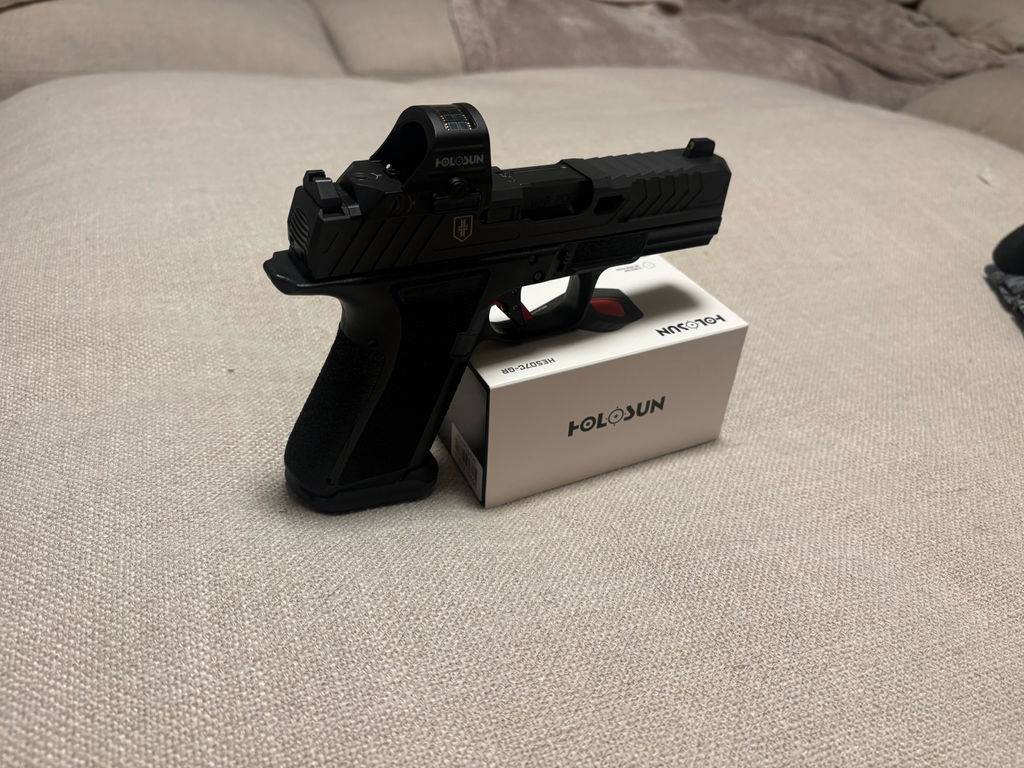
Hey Freedom Gorillas, today we’re breaking down the differences between Holosun’s brand new 507C-X3 and the long-standing 507C-X2. If you’ve been running a 507C for years, you already know it’s one of the most popular RMR-footprint red dots on the market. Now Holosun has refreshed it with the X3, and the big question is what actually changed, and which one should you buy?
First, let’s clear something up. The 507C-X2 is not discontinued! Holosun is still manufacturing it, and they’ve actually lowered the price. That’s important to know. To me, this looks like a strategic move. There are a lot of budget red dot brands that have entered the market over the last few years, and instead of abandoning the X2, Holosun repositioned it as a more affordable and proven option. So now you’ve got the X2 holding down the value category, and the X3 stepping in as the upgraded, modernized version.
Similarities
So to help you decide which one is right for you, let’s go over what’s the same first, because there’s a lot that did not change, and that’s a good thing.
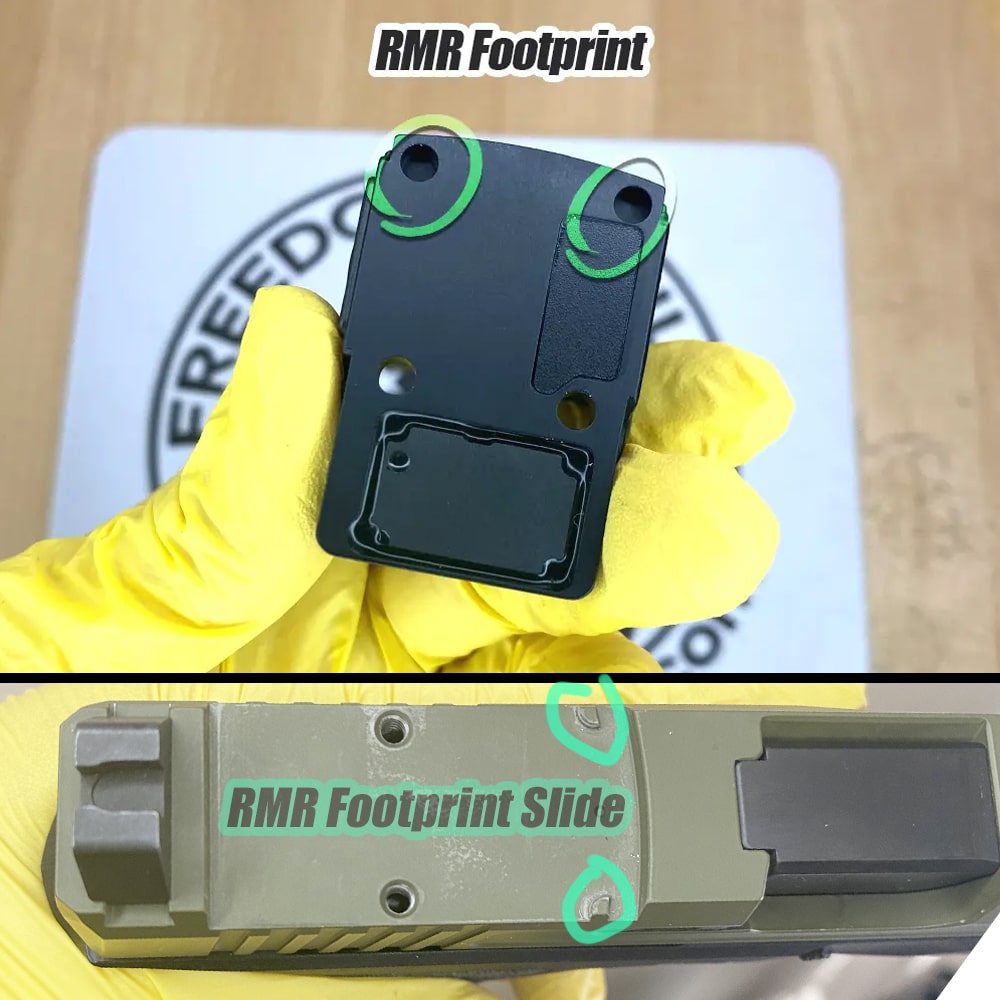
Both optics still use the RMR footprint, so if your slide or adapter plate fits a 507C-X2, it will also fit the 507C-X3.
They both use Holosun’s Multi-Reticle System, which means you get the 2 MOA dot, the 32 MOA ring, or the dot and ring together.
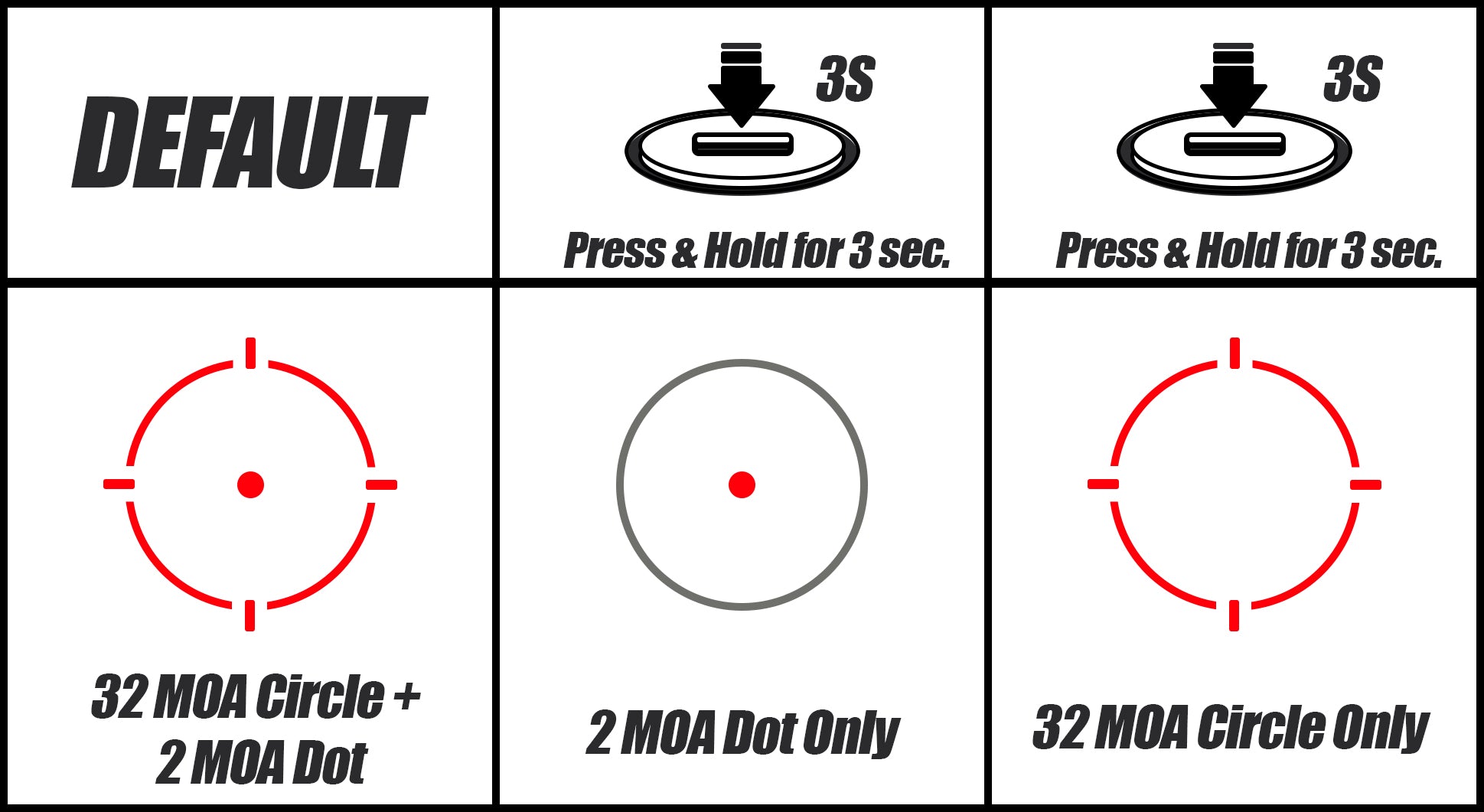
Both have Solar Failsafe, Shake Awake, brightness memory, and manual controls. They both use a CR1632 battery. They’re both made from 7075 T6 aluminum. You still get 1 MOA adjustments, solid durability, and that proven 507C reliability people have trusted for years. So from a foundation standpoint, they are built on the same DNA.
Differences
Now let’s talk about what actually changed.
The first and most noticeable difference is the housing design. The X2 has that classic curved 507C profile that we’ve all gotten used to. The X3 moves to a more modern, flatter design which is much more similar to the 508T style. It looks more squared off, which to me makes it look more aggressive. And it also has subdued blacked out branding.

The second change tied to that housing is the extended hood. The X3 has a slightly extended front overhang designed to help reduce glare. That extended hood helps shield the glass from certain light angles and gives it a little more protection up front. It’s subtle, but it’s functional. Holosun didn’t just change the shape to make it look different, there's a purpose behind it.
The third major upgrade is battery life. The X2 is rated at 50,000 hours on dot-only setting 6. The new X3 doubles that to 100,000 hours on the same setting. That’s a big jump. Now realistically, most of you are changing your battery once a year anyway just to be safe. But doubling the runtime is still a significant upgrade, and it shows Holosun is continuing to refine efficiency.

One of the more underrated upgrades is the addition of a forward-facing photodiode sensor. The X3 features Solar Failsafe just like the X2, but it now includes a forward-facing sensor that works in combination with the solar panel to automatically manage brightness as lighting conditions change. For those who like running auto-brightness, that’s a big deal. Instead of just reacting to light from above, the optic is better able to adjust based on the environment in front of you. If you’re someone who prefers setting it and forgetting it, the X3 definitely improves that experience.

The next difference is the deck height between the two optics. The X3 is roughly 1mm shorter than the X2, which might not seem like much but it might help some platforms co-witness with their iron sights better.

The last difference is reticle color options. The reticle system itself is the same. It’s still a 2 MOA dot, 32 MOA ring, or both combined. But the X3 adds a gold reticle option alongside red and green. Some shooters find gold easier on the eyes, especially in certain lighting conditions. It’s not going to change how the optic functions, but it does give you another customization option that the X2 does not offer.

Full Comparison: Which One Should You Get?
So when you step back and look at it, this isn’t a completely different optic. It’s a refinement. The core performance is the same. The footprint is the same. The reticle system is the same. The durability standard is the same. What you’re really choosing between is proven value versus modern upgrades. The chart below highlights everything discussed.
| Feature | Holosun 507C-X2 | Holosun 507C-X3 |
|---|---|---|
| Housing Design | Classic curved 507C profile | New flatter, 508T-style profile |
| Extended Hood | No | Yes (helps reduce glare) |
| Reticle System | Multi-Reticle System (MRS): 2 MOA dot, 32 MOA ring, dot + ring | MRS: 2 MOA dot, 32 MOA ring, dot + ring |
| Reticle Colors | Red, Green | Red, Green, Gold |
| Auto-Brightness | Solar Failsafe (top solar panel only) | Solar Failsafe + forward-facing photodiode sensor |
| Battery Type | CR1632 | CR1632 |
| Battery Life (Dot Only, Setting 6) | ~50,000 hours | ~100,000 hours |
| Footprint | Trijicon RMR | Trijicon RMR |
| Housing Material | 7075 T6 Aluminum | 7075 T6 Aluminum |
| Brightness Modes | Manual + Automatic | Manual + Automatic |
| Shake Awake | Yes | Yes |
| Water/Weather Rating | IP67 | IP67 |
| Vibration Rating | 5000G | 5000G |
If you’re looking for a proven, affordable optic that’s been vetted for years, the 507C-X2 is still an excellent choice especially now that the price has been lowered. It’s reliable, it works, and it’s hard to beat for the money.
If you want the updated housing, the extended glare-reducing hood, double the battery life, the option for a gold reticle, or you use auto brightness a lot, and you like having the latest version, then the 507C-X3 is the move. At the end of the day, both are solid choices.